

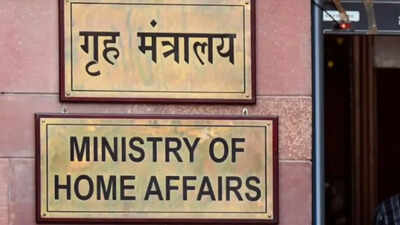
NEW DELHI: The Ladakh outfits in talks with the home ministry on safeguards for the Union territory, have been asked to come up with a draft proposal addressing seven key questions relating to the larger governance structure for Ladakh, including the division of powers and functions between the proposed UT-level body and the seven district councils.Sources involved in the ongoing dialogue process between the home ministry and Ladakh administration on one side and the Leh Apex Body (LAB), Kargil Democratic Alliance (KDA) and activist Sonam Wangchuk, on the other, told TOI that the latest round on Sept 9 saw a presentation being made by the MHA on different aspects of the proposed governance structure involving the three tiers, the apex UT-level body, autonomous district councils and the panchayats.The first question sought suggestions on the name of the UT-level legislative body as well as its executive arm. A key angle discussed was the proposed representation of LAHDC representatives in the UT-level body. The Ladakh representatives were asked if they favour direct elections to the UT-level legislative body, with the members representing different constituencies to be carved through delimitation. The LAHDC would thus have no direct representation in the UT-level body. Alternatively, it was proposed that the UT-level body may be indirectly elected by the LAHDCs. A consensus emerged in favour of direct elections.As for the district councils, they will also have direct elections, as per the process already followed for the existing two councils in Ladakh and Kargil.The third question focused on functions that should necessarily be exercised by the UT-level body “in the interest of uniformity, coordinated development and effective administration”. The MHA officials assured that the UT-level body would be given charge of matters related to land, culture and heritage, environment, mineral resources as well as those covered under Article 240 of the Constitution of India.The Ladakh representatives were asked what functions should remain at the district level, so as to protect local interests and ensure responsive governance. Also, they were asked to specify what principles should guide the allocation of powers between the UT-level body and LAHDCs; the options being local preference, administrative efficiency and uniformity of policy.Another poser to LAB, KDA and Wangchuk related to subjects that should fall within the law-making domain of the UT-level elected body, which shall be in tune with the basis structure of the Constitution.The Ladakh bodies were told to submit their answers to the seven queries so that a draft proposal could be prepared for the next round of discussions likely in October. Since the proposed governance structure is expected to be a unique model, legal opinion will have to be taken before finalising the legislative framework.Notwithstanding the progress made in the Sept 9 discussions, LAB, KDA and Wangchuk had expressed disappointment with the lack of “headway” in the discussions, a day later. When contacted, Ladakh chief secretary Ashish Kundra disagreed and insisted that the talks were productive, with the entire legislative process of creation of the UT-level body as well as autonomous councils in the five new Ladakh districts, explained in detail to the Ladakh representatives. They were told that a Constitutional amendment would have to be passed by Parliament along with a separate legislation detailing the powers and responsibilities of different tiers of the proposed governance structure.“Clarity was offered on the proposed constitutional safeguards. Besides, an assurance was given to the Ladakh bodies that their demand for withdrawal of cases related to the violent events of September 24, 2025 as well as compensation would be put up before the Ladakh LG,” said Kundra.The LG, in fact, accepted the demand on Sunday, announcing a compensation of Rs 15 lakh each to the next kin of those killed, Rs 3 lakh for those who sustained minor injuries and Rs 1 lakh for ones with minor injuries.While all other Ladakh representatives sounded positive at the end of the Sept 9 talks, Wangchuk is said to have demanded that no major decisions regarding the proposed powers of the UT-level body be taken till it is in place.
Share your thoughts in the comments
Be respectful · TOI community guidelines
This demand was however rejected by MHA which reminded him that the Ladakh LG was empowered by the Constitution to take decisions related to administration and governance, and that there could not be a void.
What should be the primary focus of the proposed UT-level governance in Ladakh?
3k+ users shared opinion today
5k+ users already voted today
3k+ users shared opinion today
Sources in Ladakh govt indicated that not all Ladakh representatives may be on the same page on the call to revive the agitation in view of the “failure” of Sept 9 talks. “The prime mover of the agitation plan is Wangchuk; the others are not in favour of a belligerent approach and prefer to build on the progress achieved in the talks so far,” said an officer.

